
PressOne
A business phone system for African SMEs, redesigned for managers.
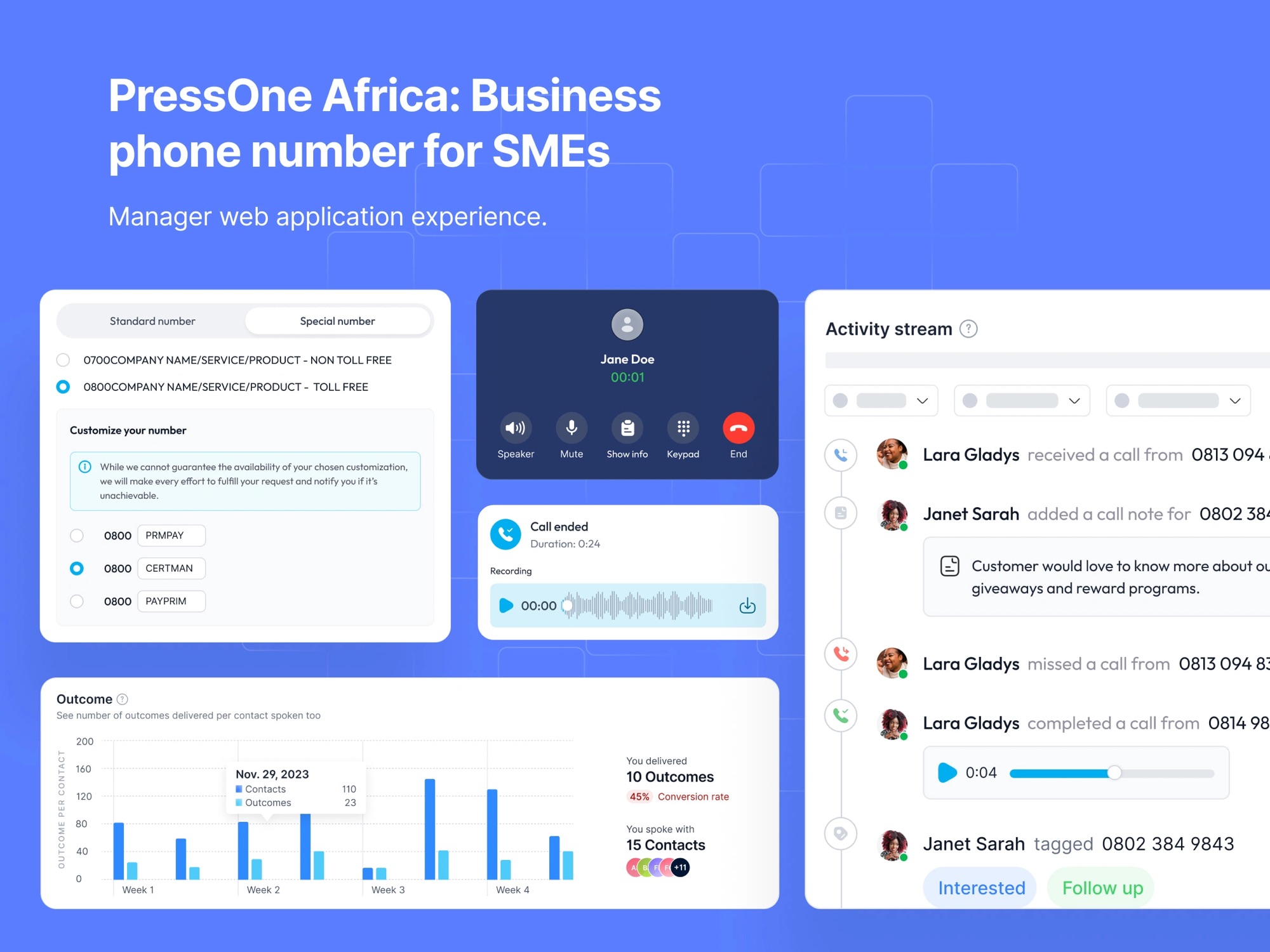
What it did for the business
PressOne grows when a business can sign up, get a number and start calling without help. I designed for that: new teams now set themselves up, managers handle call settings without support, and the developer platform I designed became part of PressOne's Developer Program launch.
PressOne gives small and medium businesses in Africa virtual phone numbers that work without a SIM, so several employees can use the same number. When I joined in 2023, the product already existed and businesses used it every day. But the experience felt dated, fragmented and intimidating for people who aren't technical.
Where it fell short
PressOne could already manage calls, onboard teams and track activity. What businesses needed was:
- Clarity: knowing where to start and what to do next.
- Confidence: knowing their business would sound professional.
- Control: managing their team and calls without digging through menus.
Onboarding
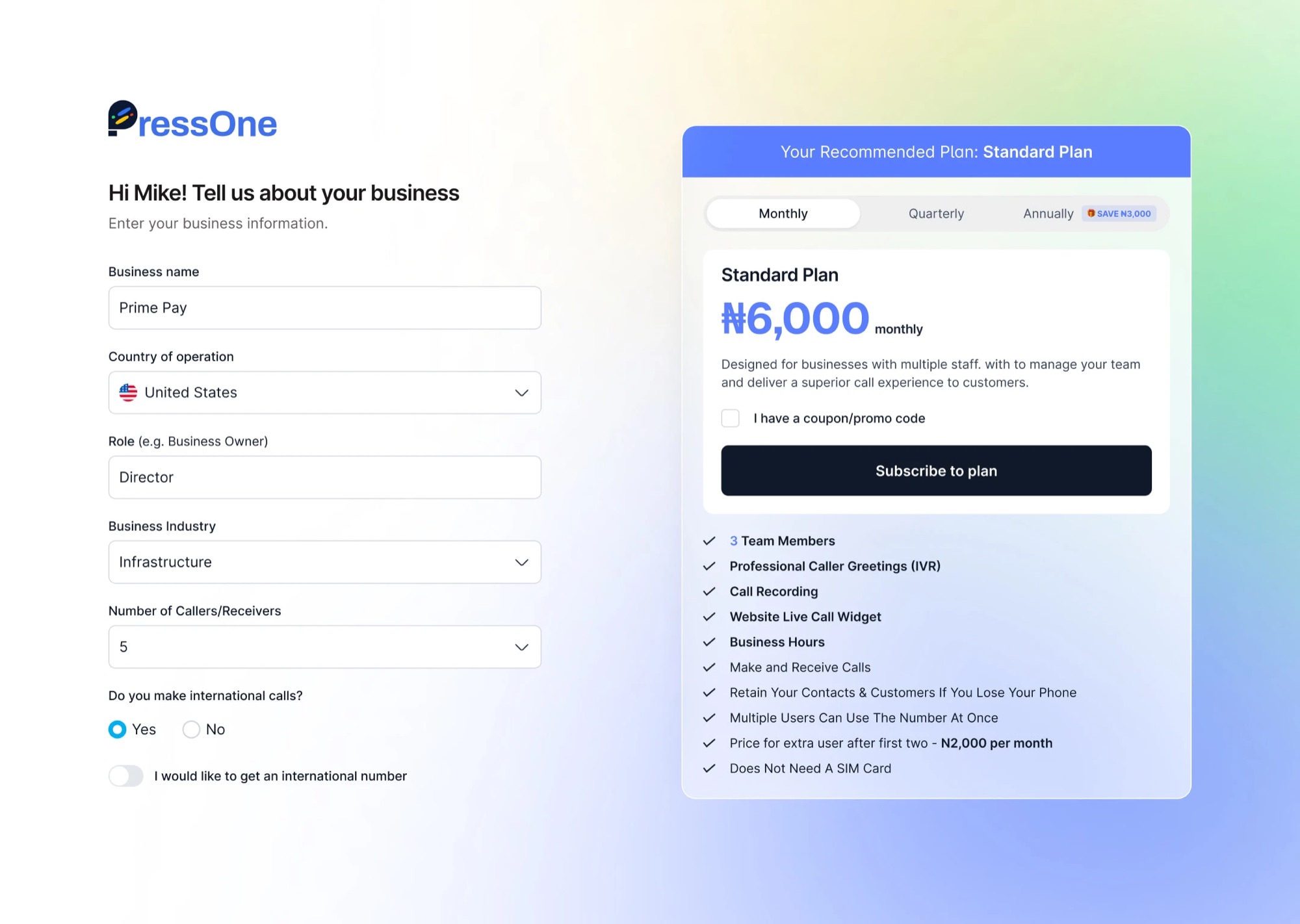
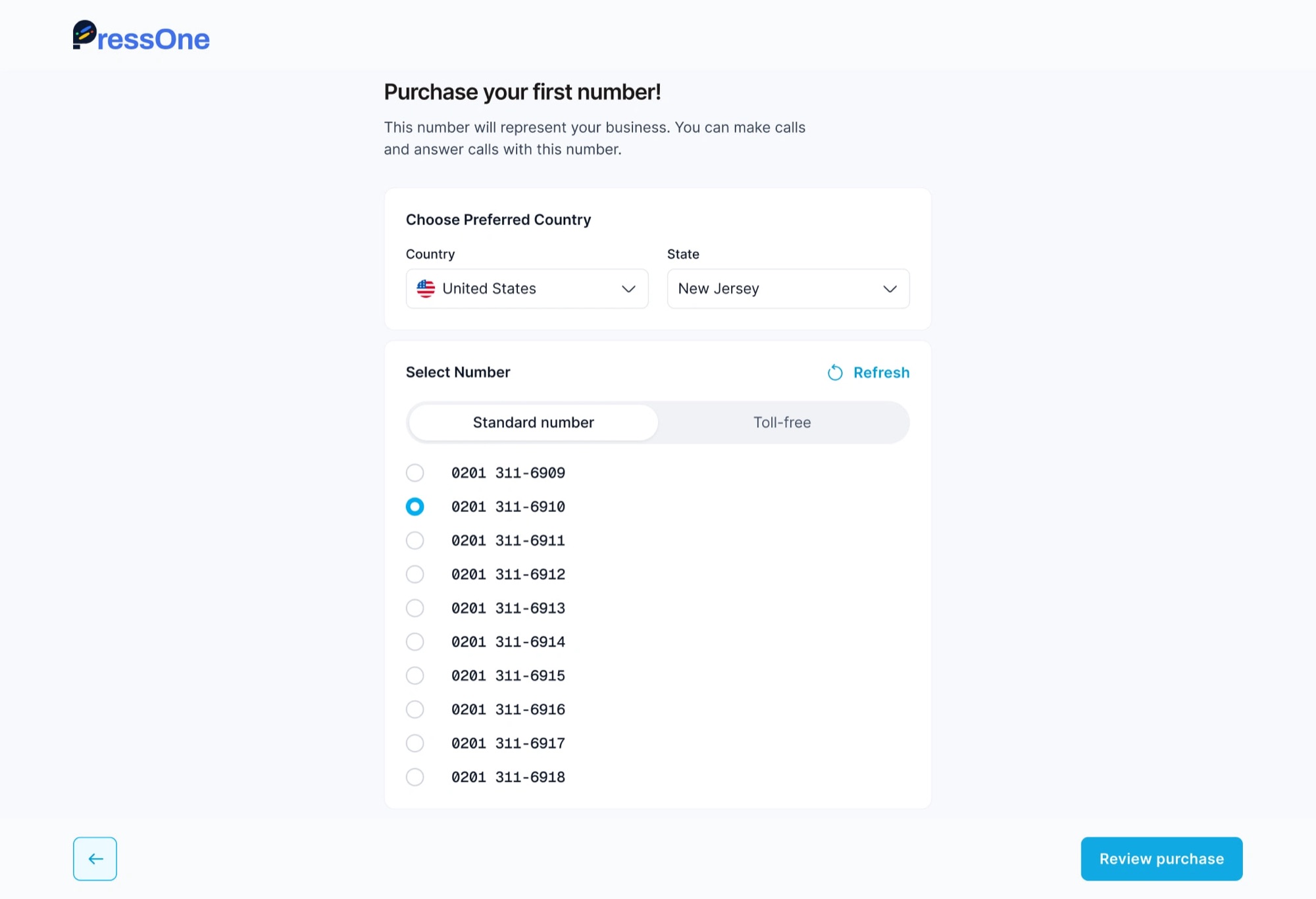
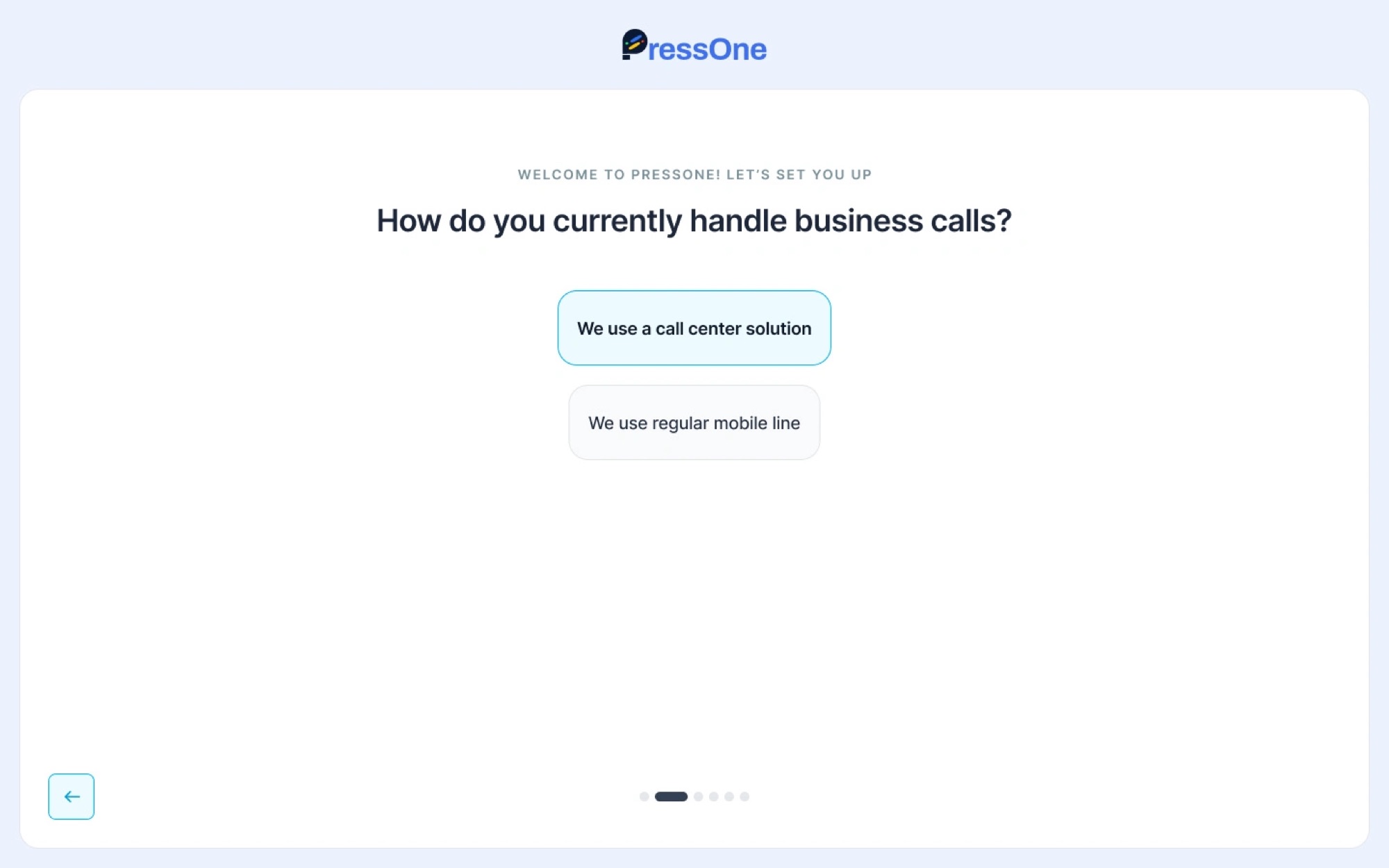
We wanted onboarding to feel like an invitation, not a barrier. Instead of dropping people into a dashboard, we asked about their business and used the answers to recommend a plan. Once subscribed, managers could buy and activate a number straight away.
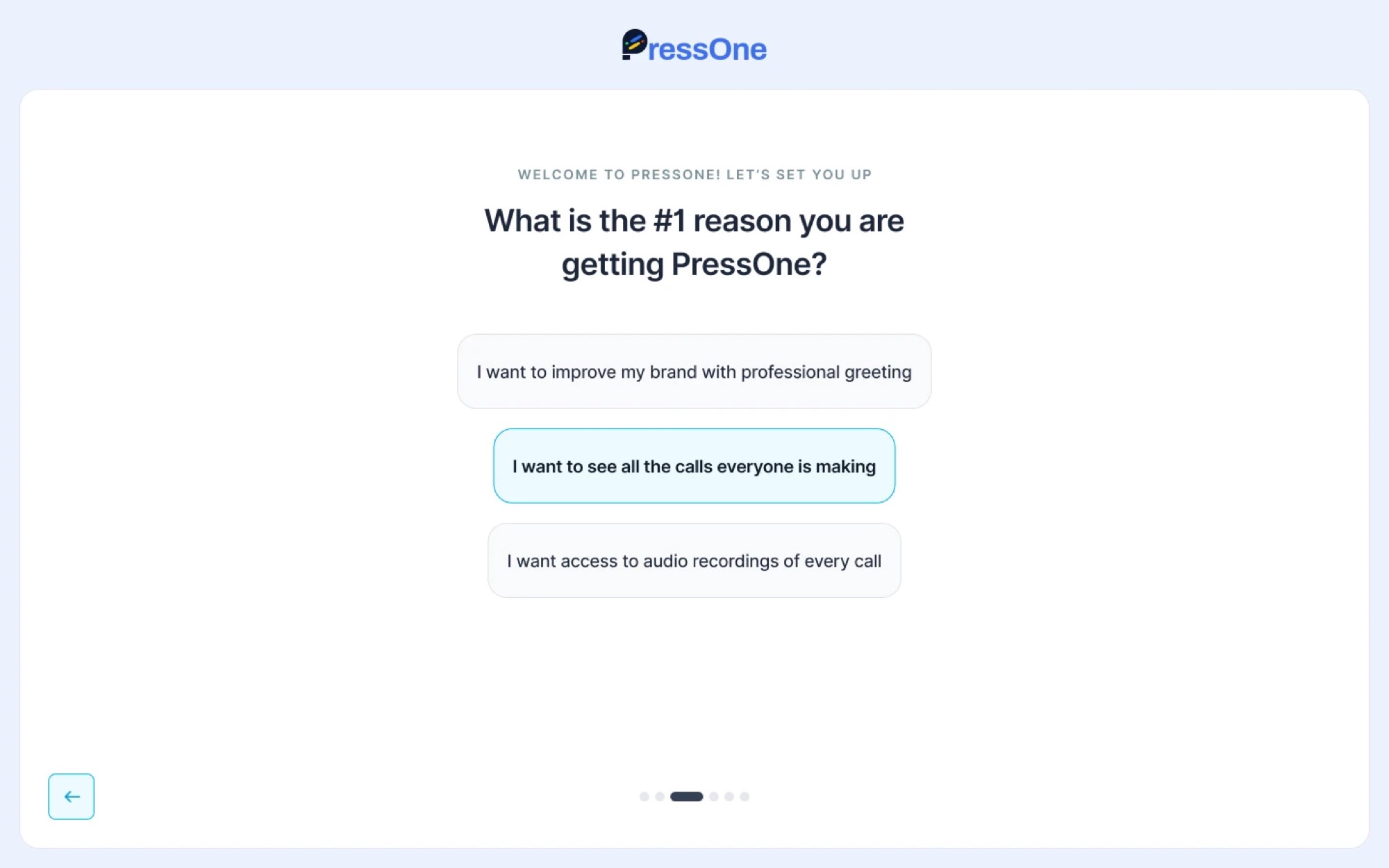
One question after sign-up
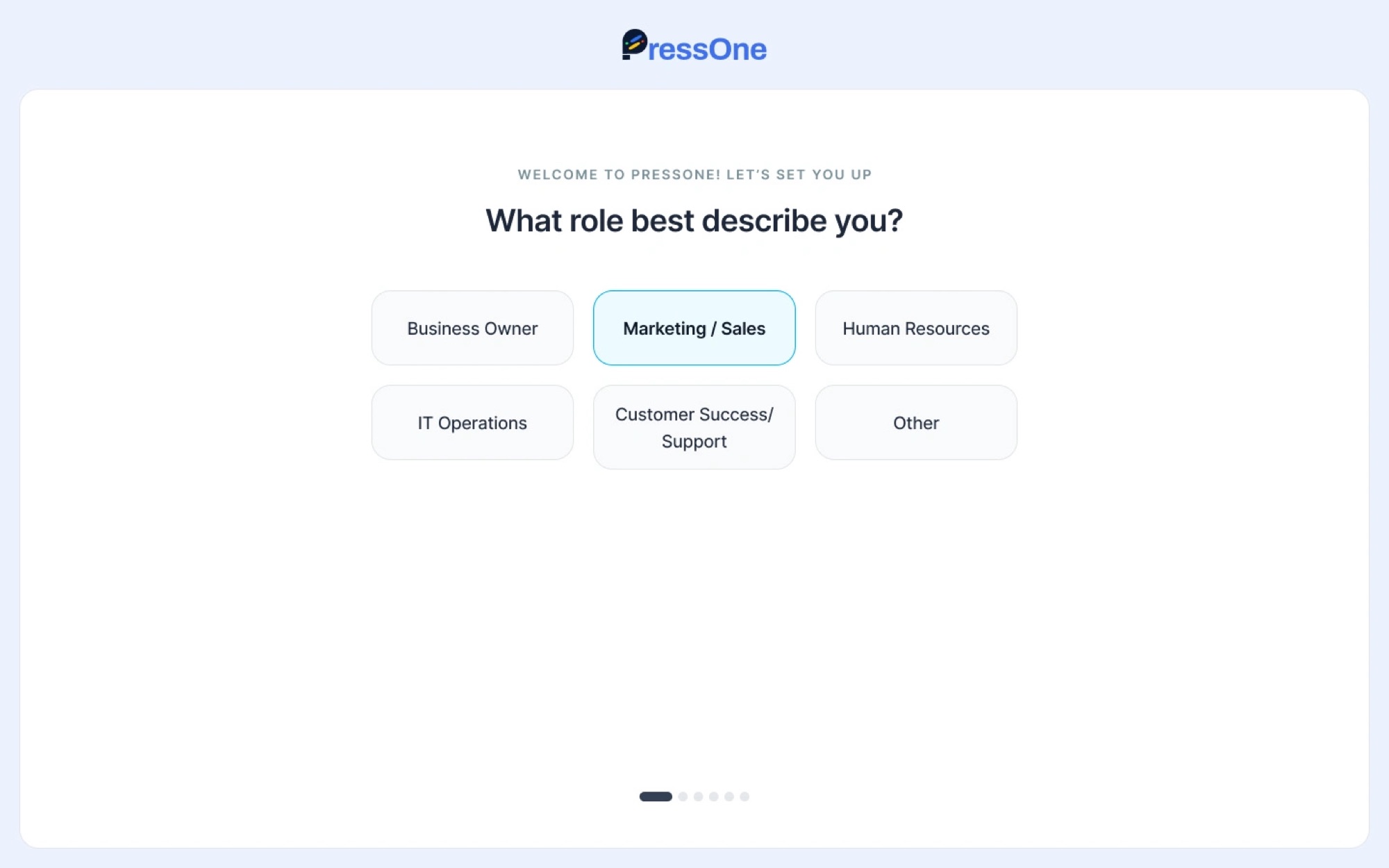
After the number was active, I added one question: what kind of team are you setting up? Sales, customer support or professional branding. That single answer decided what managers saw next, so they landed on a path that matched them instead of a generic checklist.
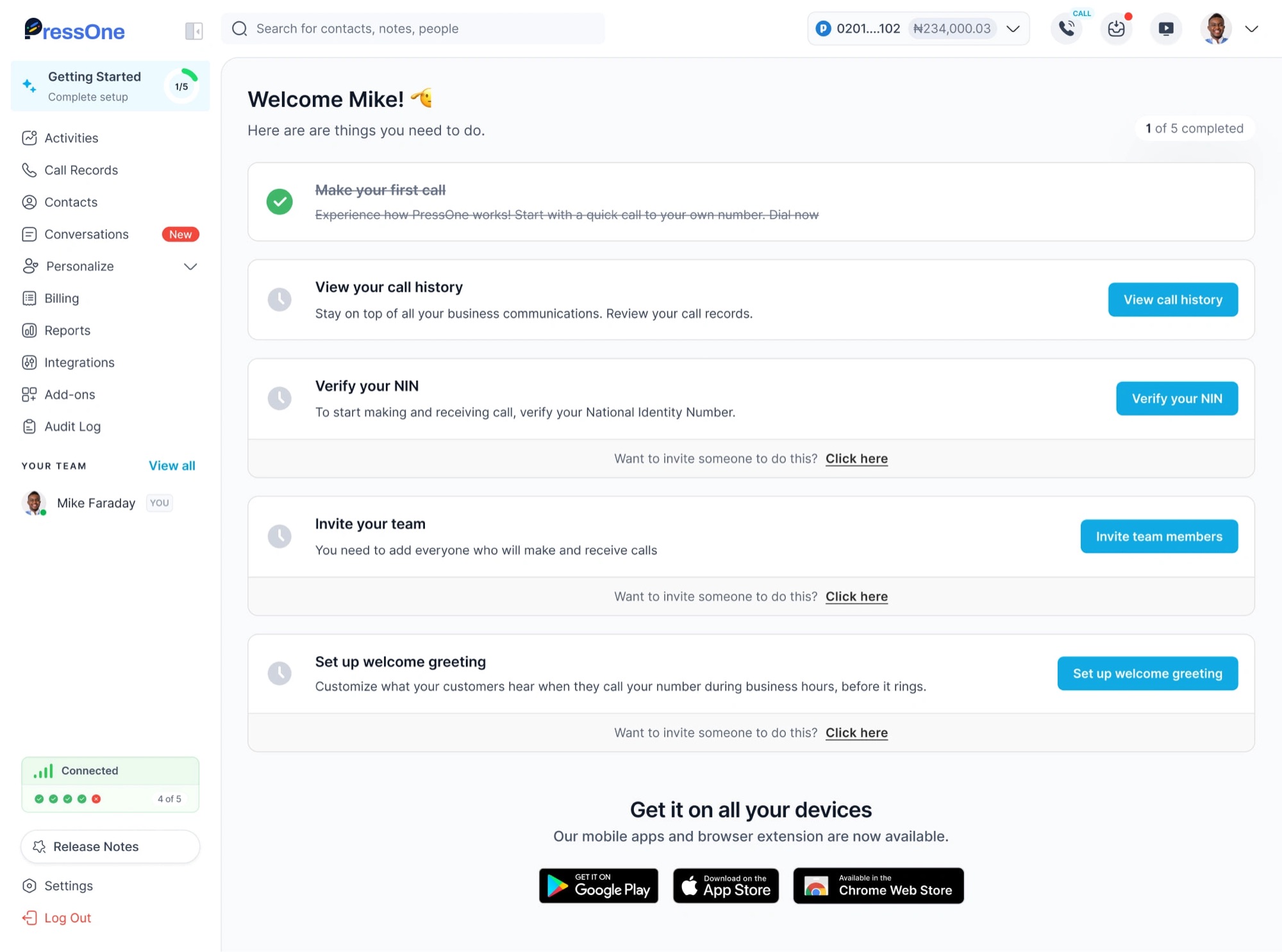
Getting started
Managers then saw tailored quick actions: make your first call, verify NIN to keep calling, invite teammates, and set up call flows, greetings and out-of-office rules.
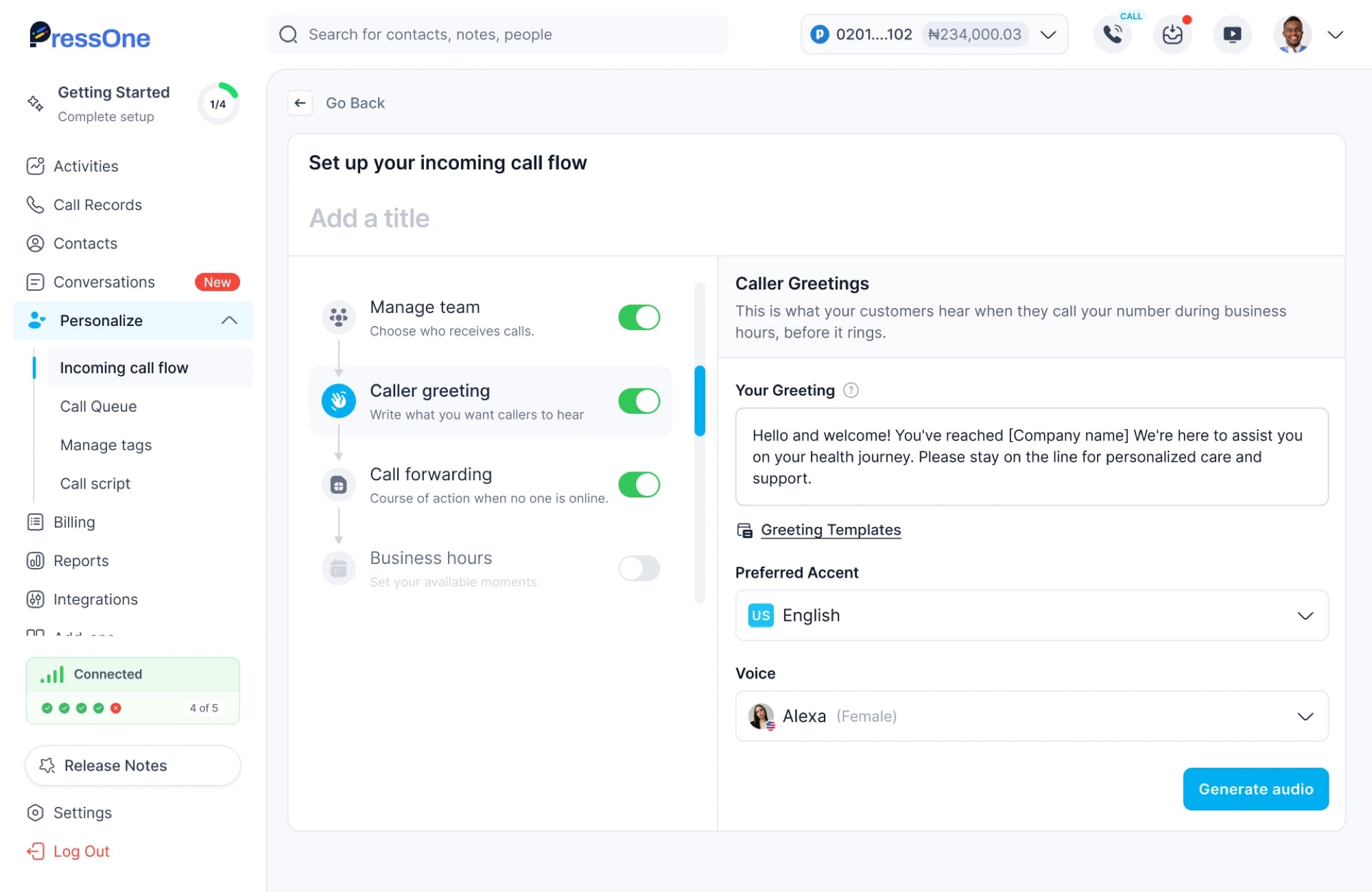
Hearing your business for the first time
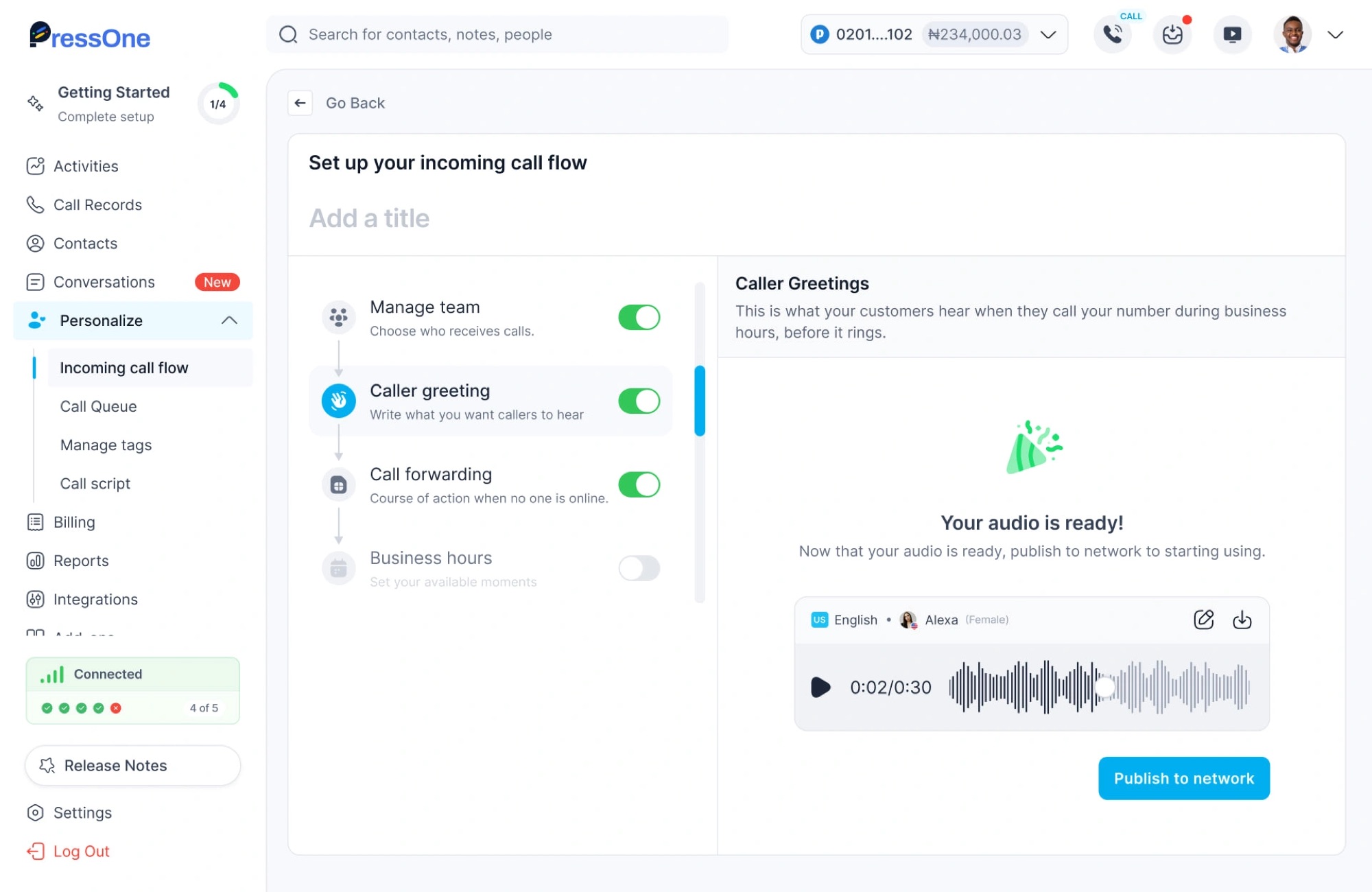
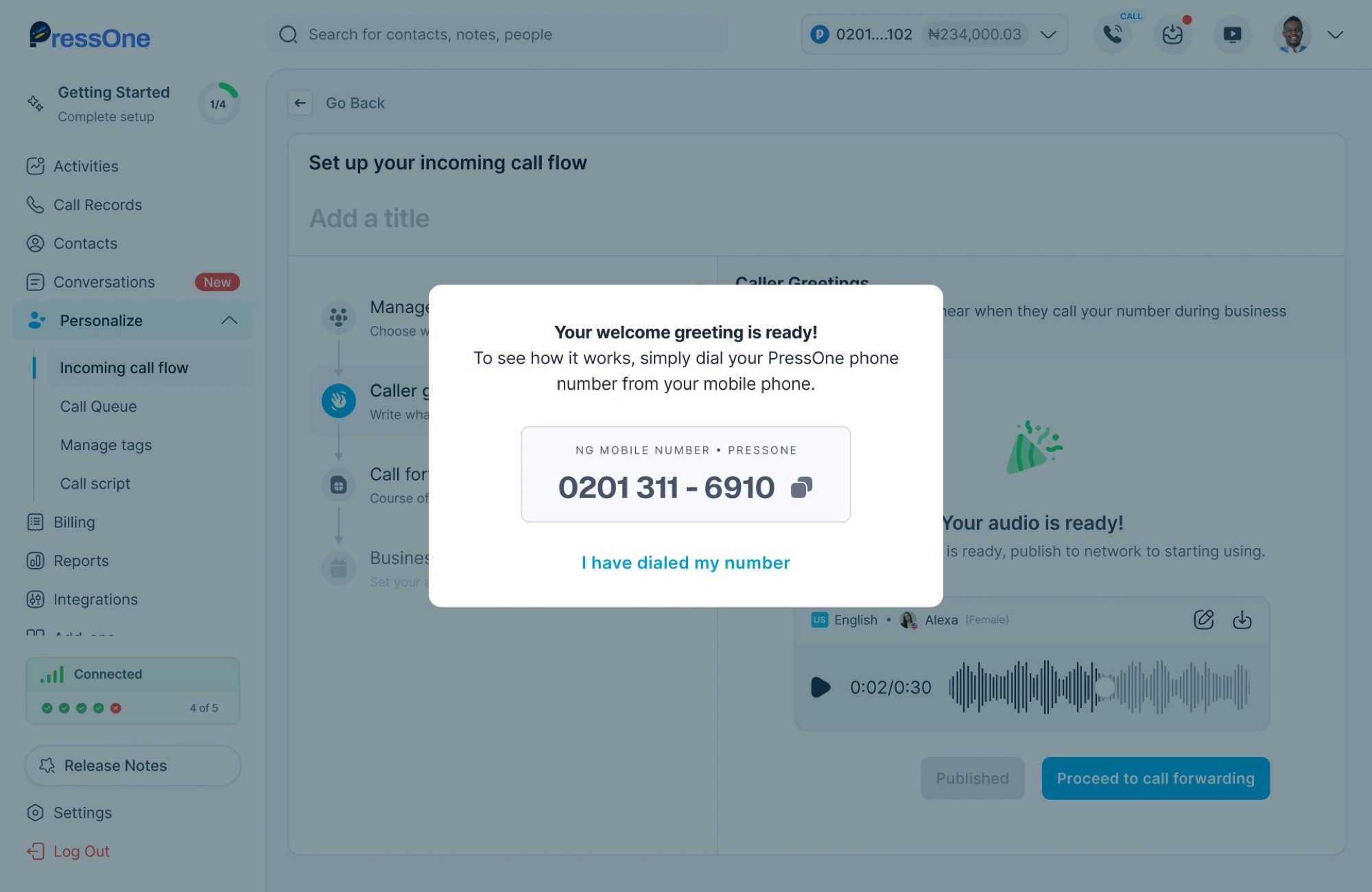
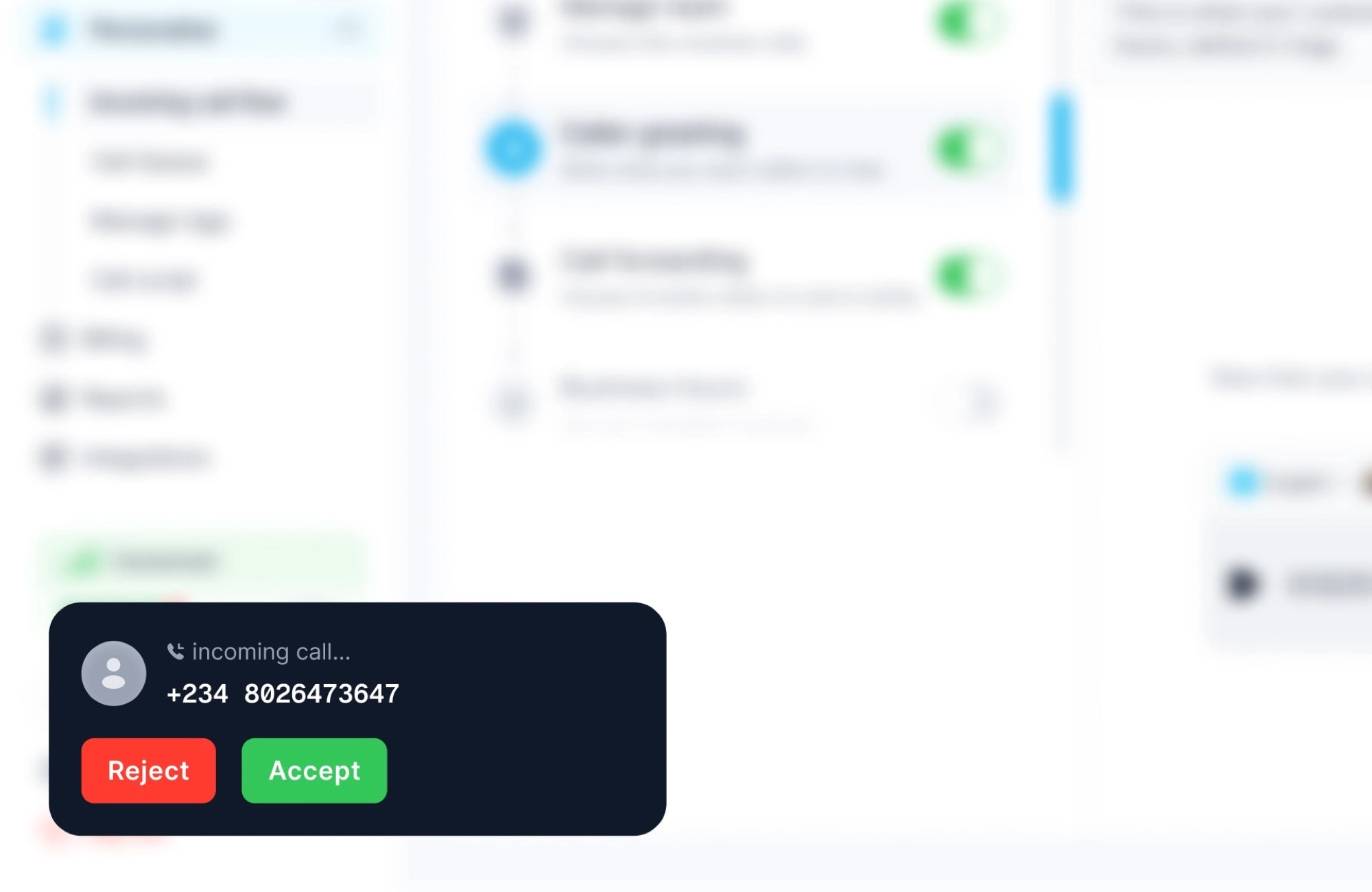
Managers record or upload a welcome greeting, preview it, then call their own number to hear it live. If it doesn't sound right, they start again. That loop gave instant feedback and turned a simple setting into a real moment.
Activity stream
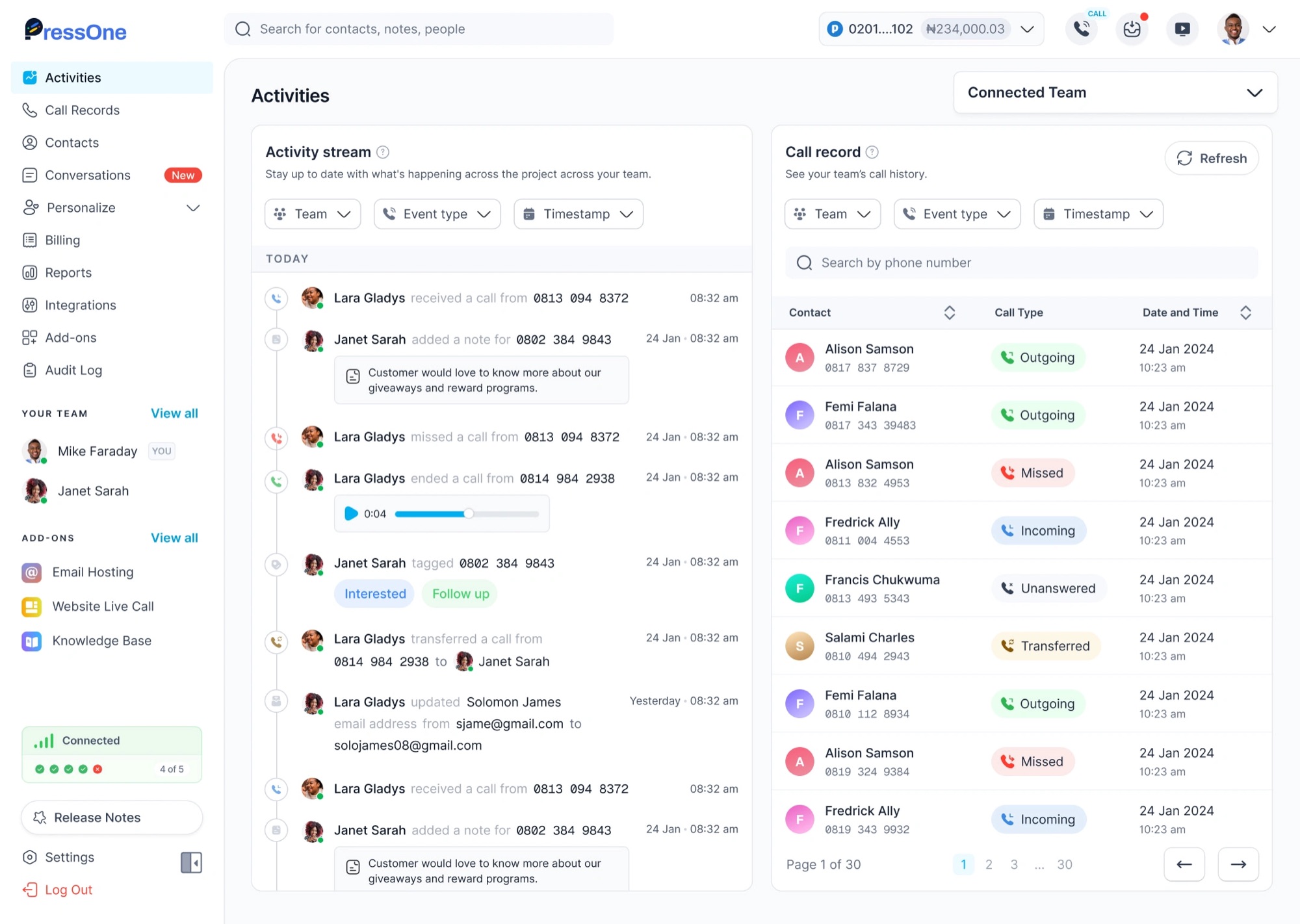
A live feed of calls, voicemails, notes and updates, with recent call records inside it, so managers can watch and act without clicking away.
Making a call
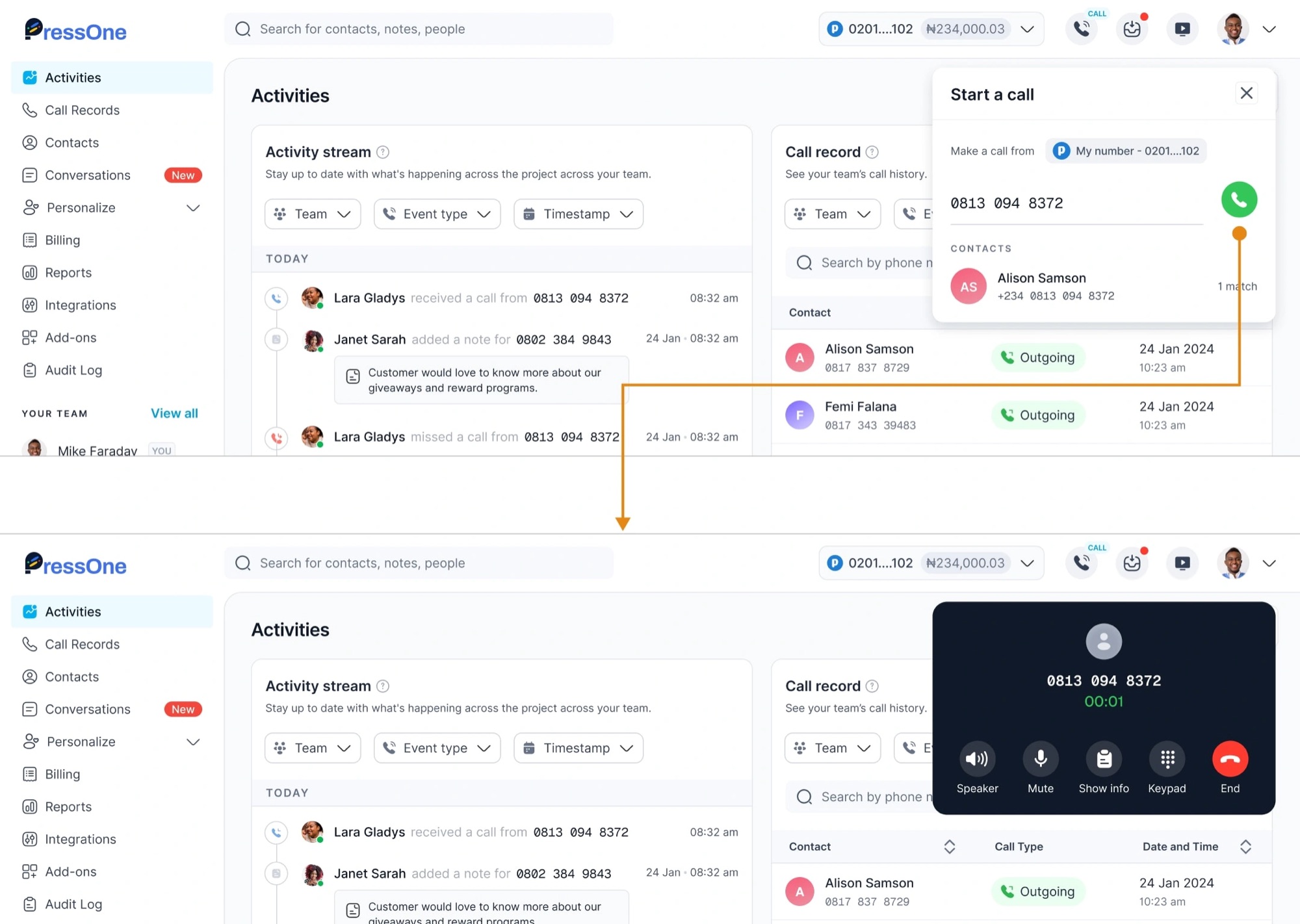
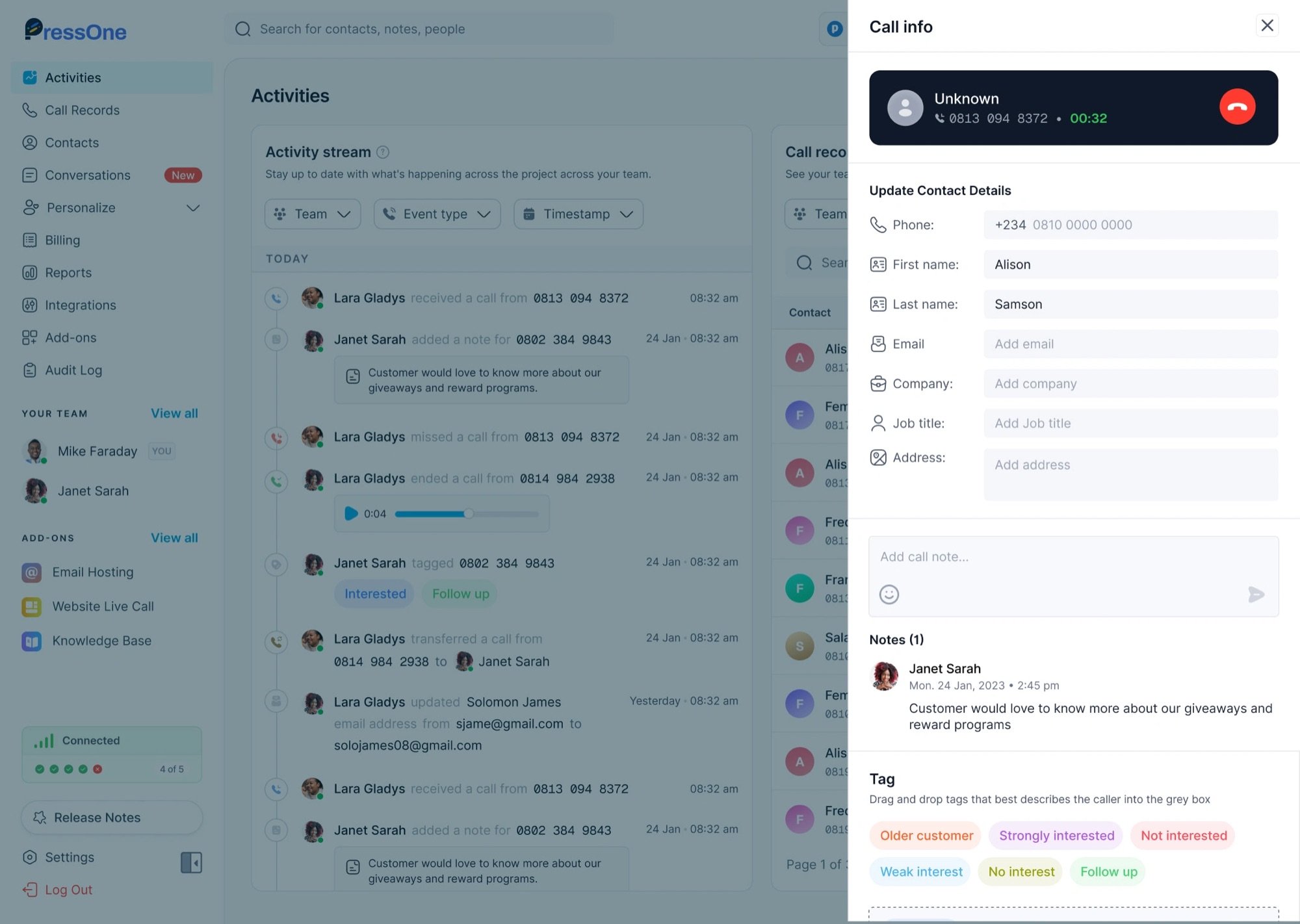
Placing a call from the dashboard was the real sign of activation. During a call, managers see the contact's details, can take notes, switch to a conversation and invite teammates in.
Call records and contacts
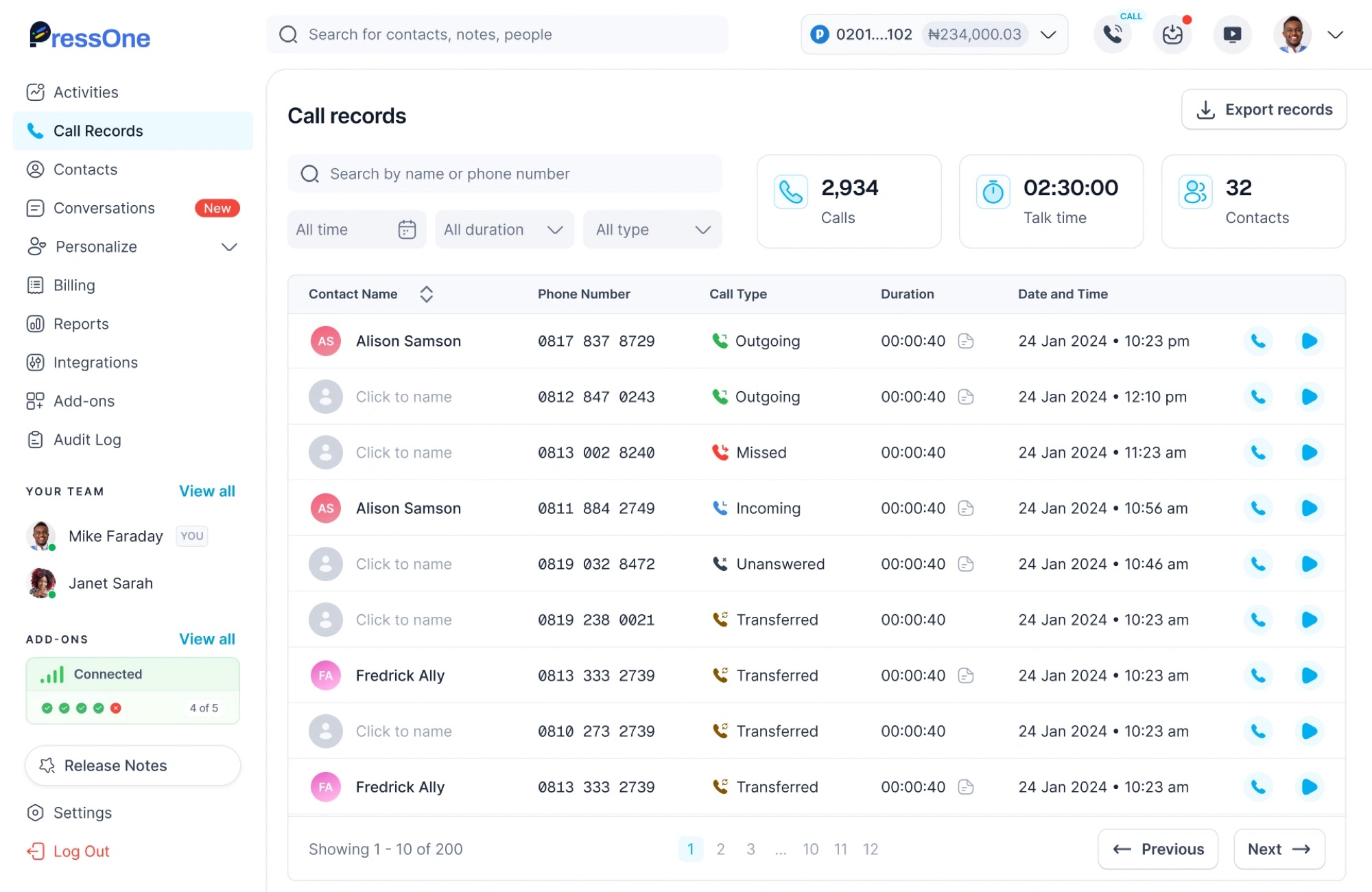
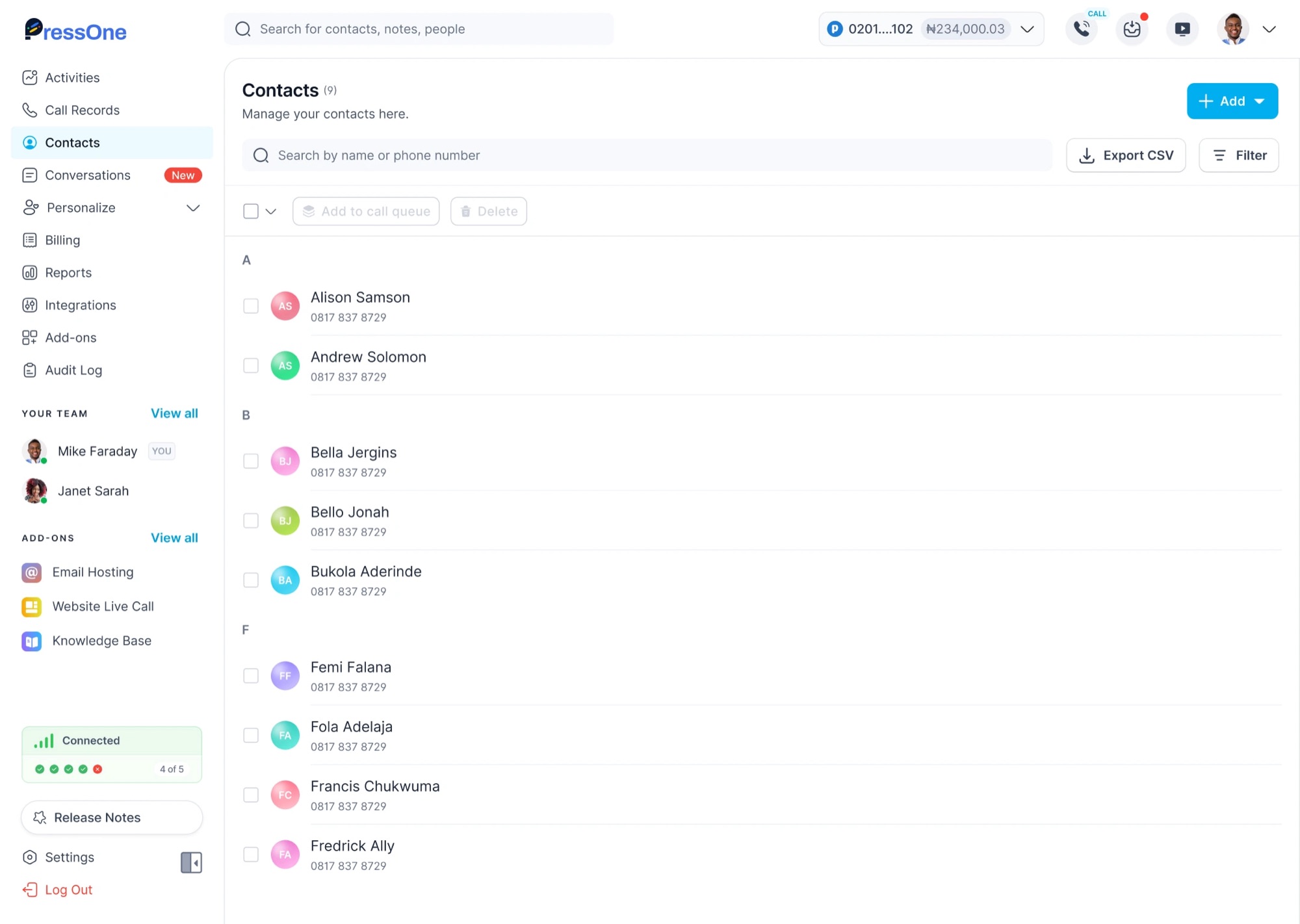
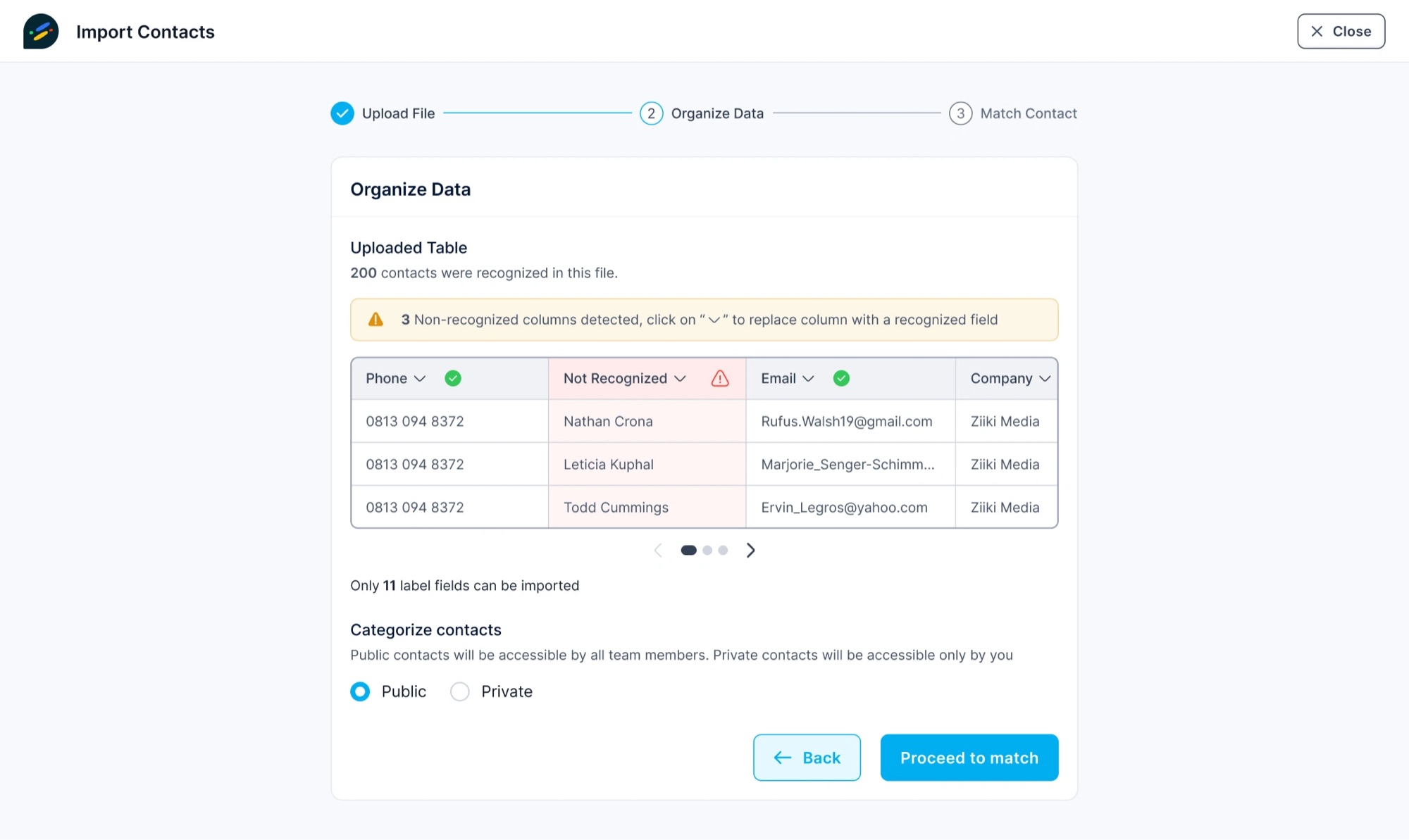
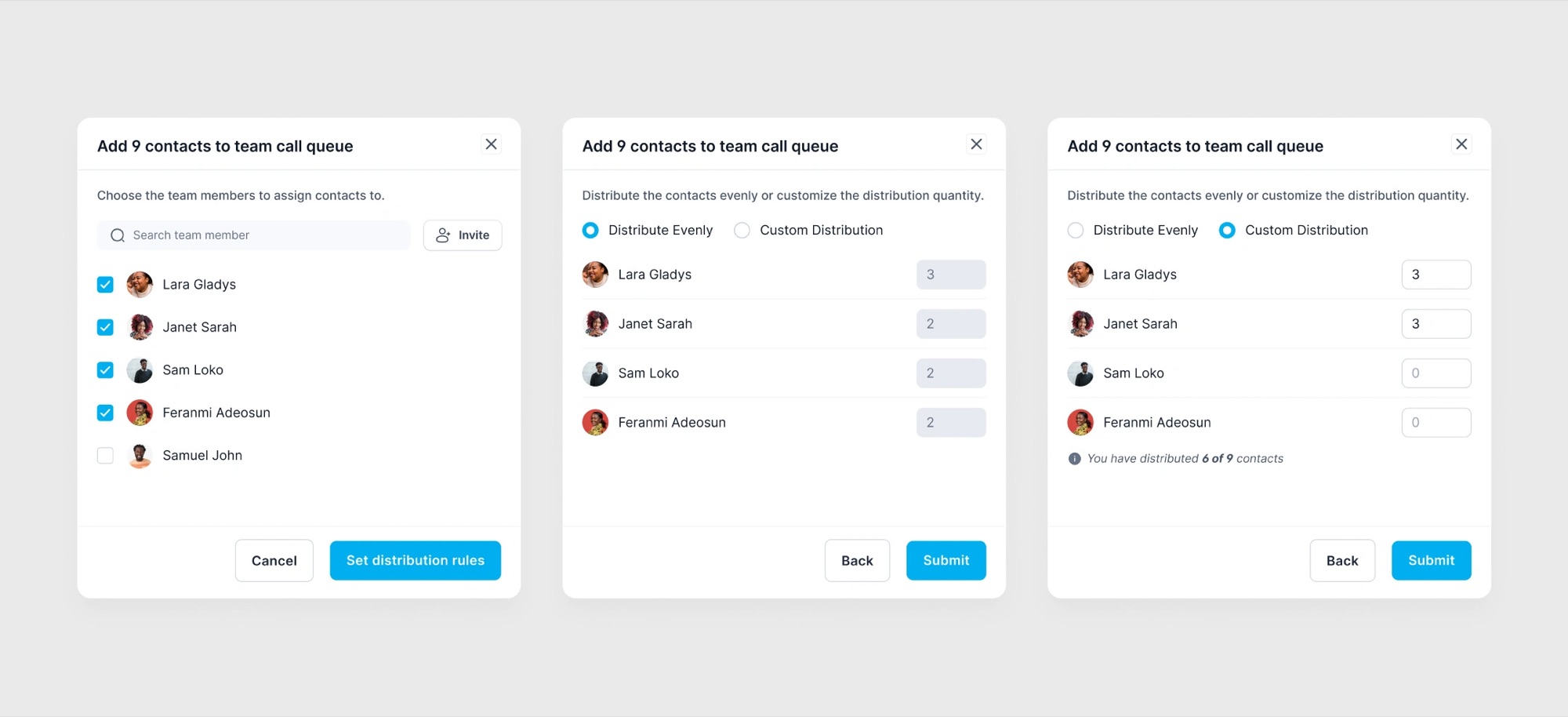
Managers see their own calls and their agents' calls, with duration, voicemails, notes and recordings they can play back. Contacts can be added one by one, imported from Excel with field mapping, and grouped into call queues.
Call flows
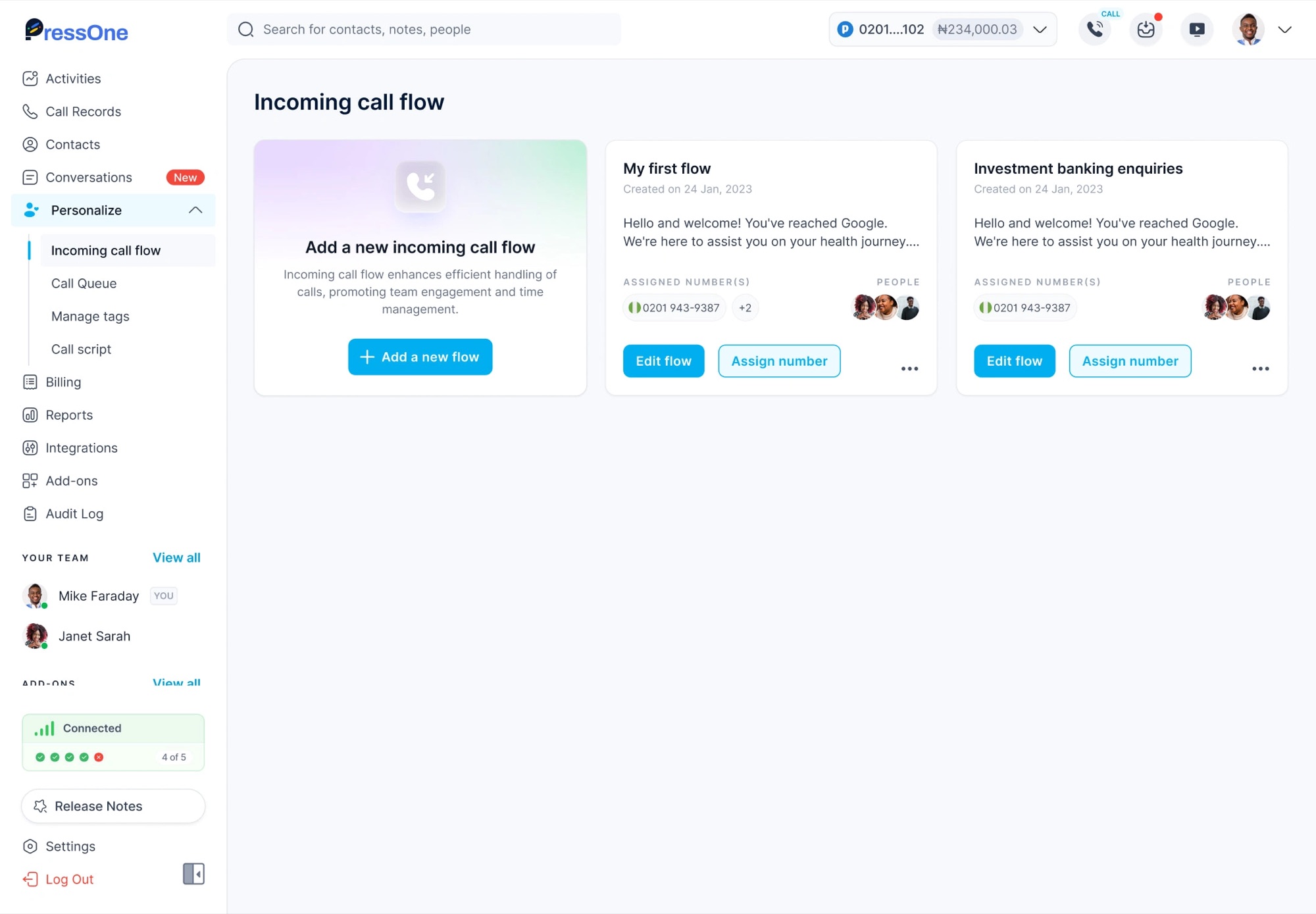
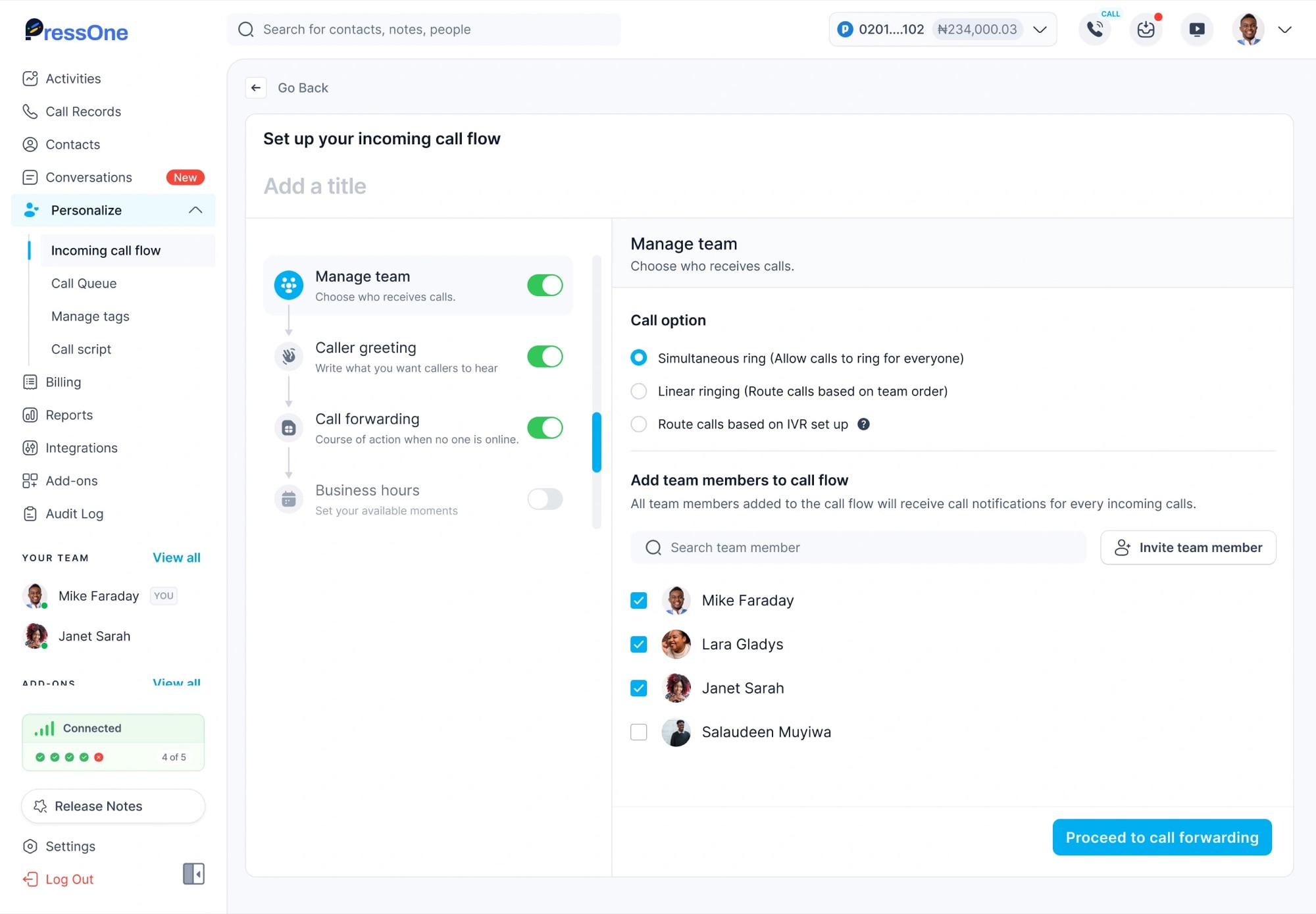
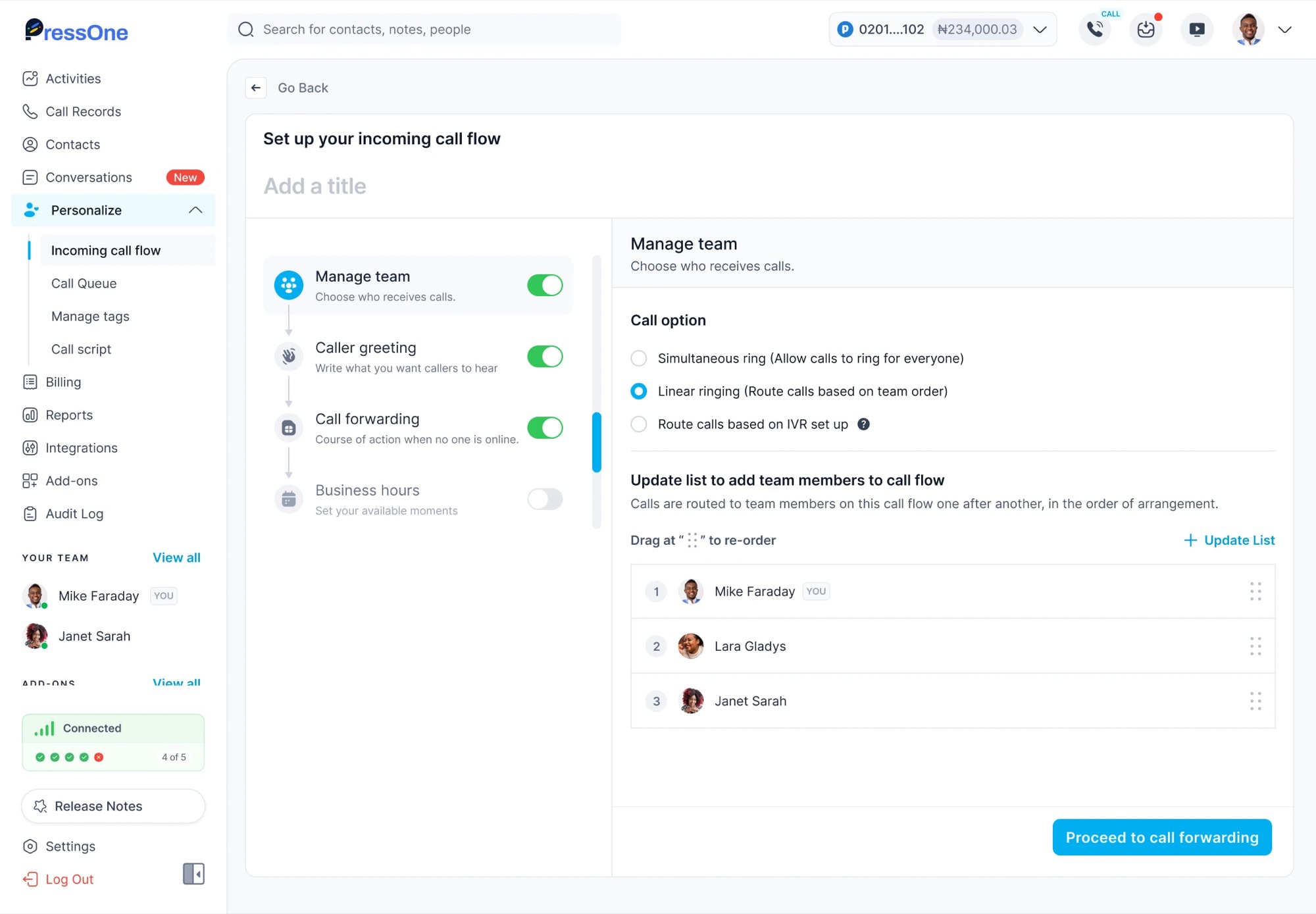
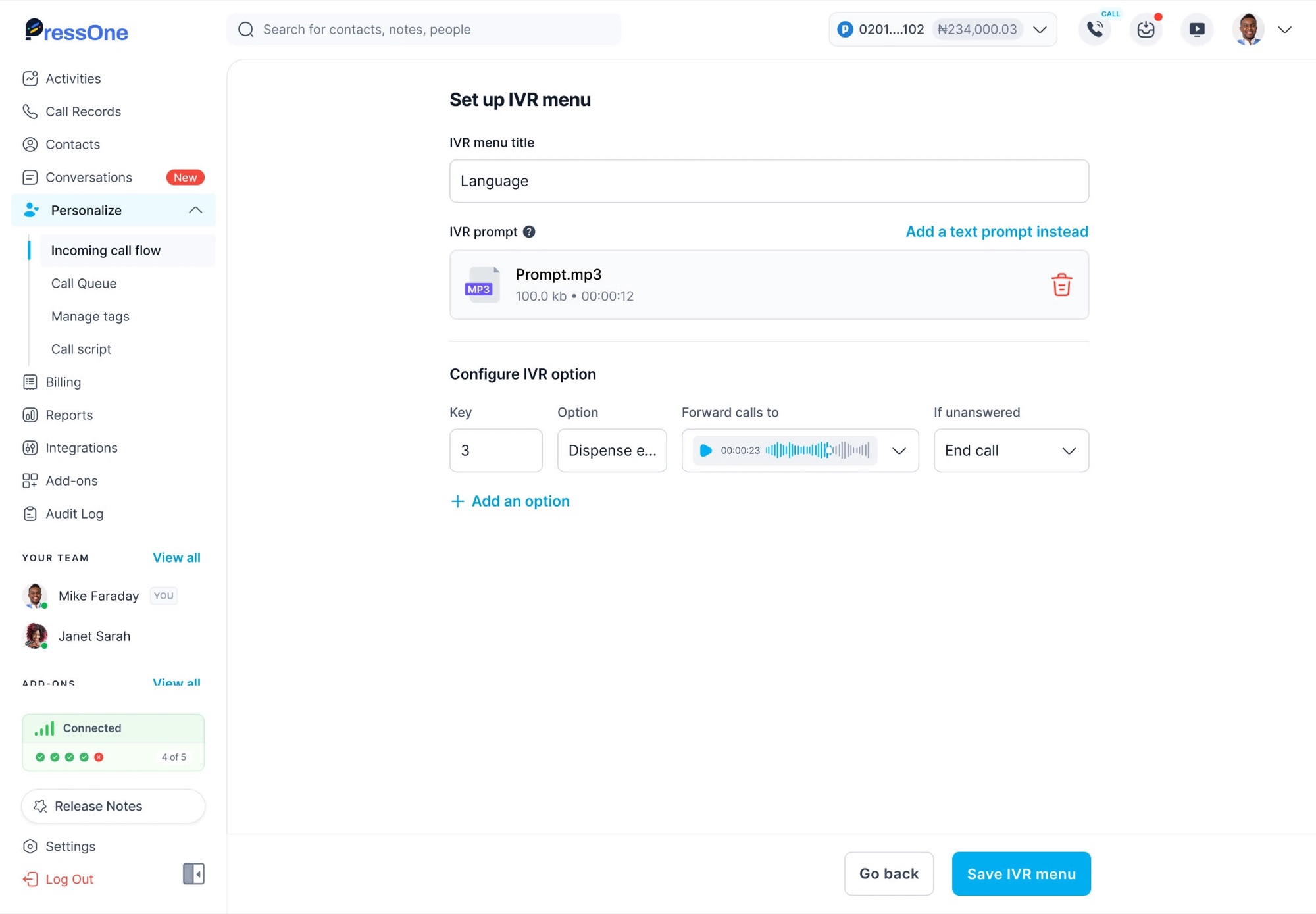
Managers decide who answers, set up IVR menus and fallback rules, write greetings, and create out-of-office flows.
Conversations and add-ons
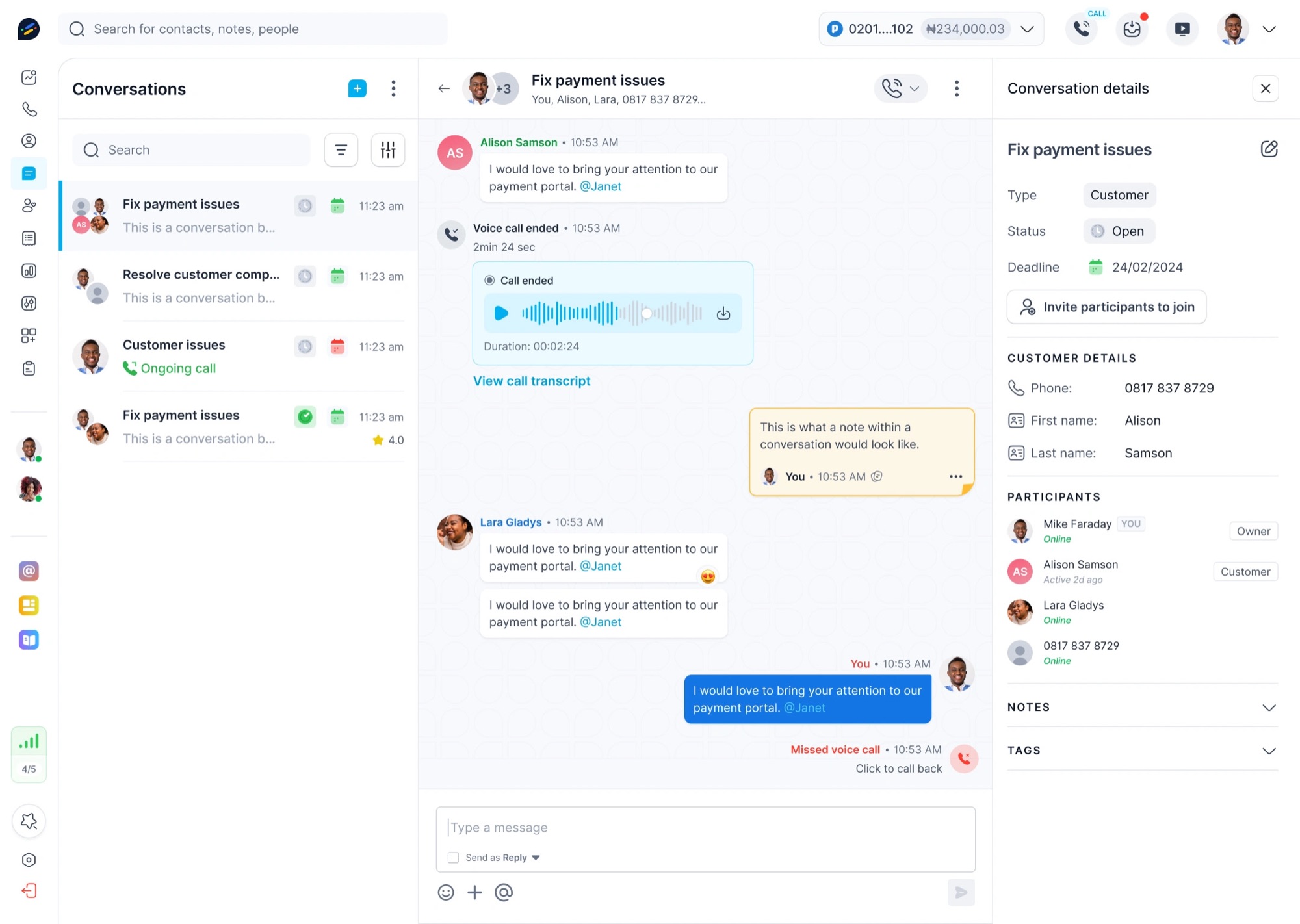
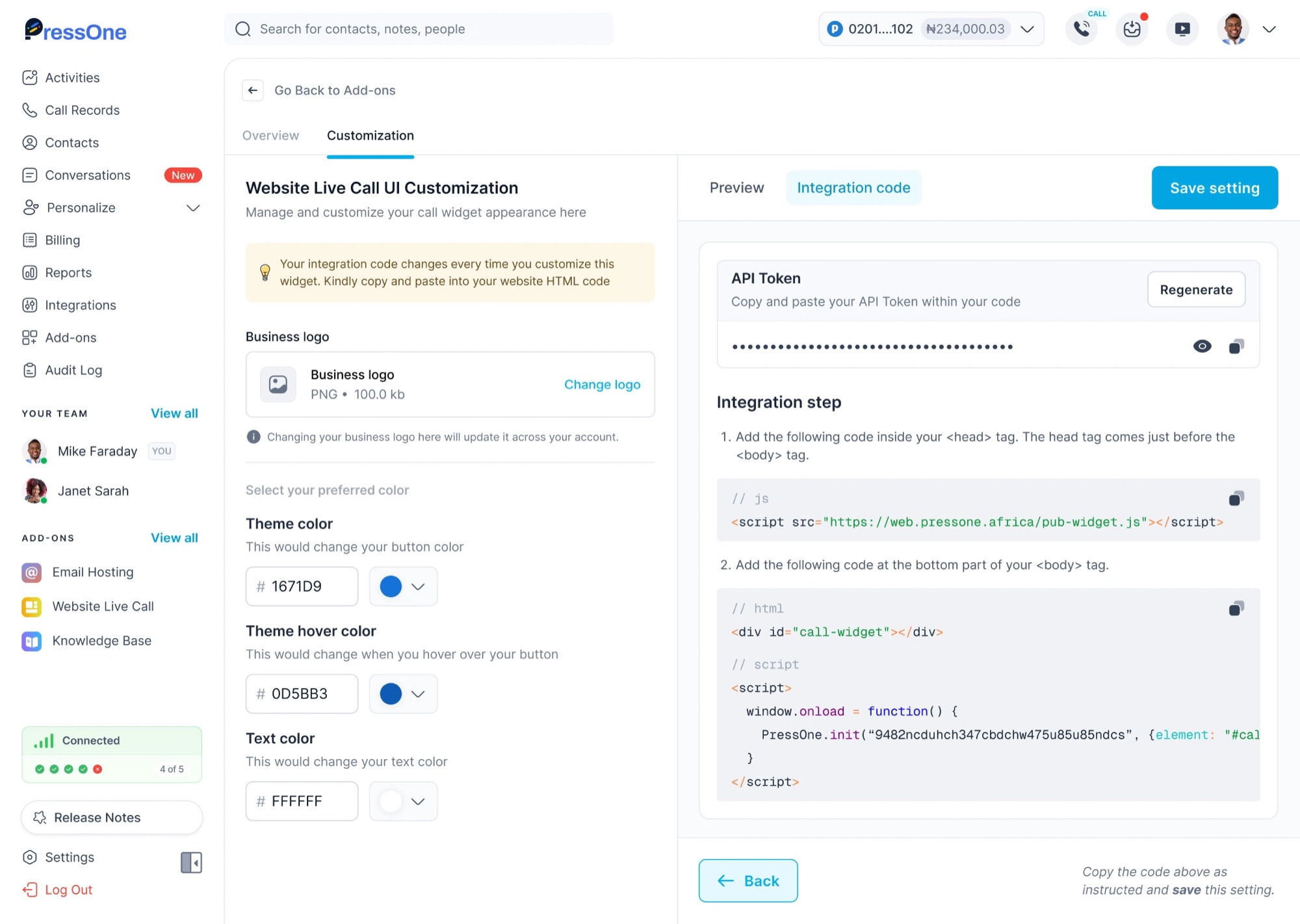
Calls can continue as chat threads, with teammates added in. An add-ons marketplace lets businesses switch on extras like live website calling, email domain integration and voice OTP.
How we measured it
- More people finishing sign-up, activating numbers and setting up greetings.
- First call and welcome greeting as the key activation milestones.
- Smoother mobile flows, since 70% of sign-ups came from mobile.
- Managers using the activity stream and call records every day.
- Fewer complaints about confusing flows.
We tracked this through OpenReplay sessions after launch, conversations with customers and weekly reviews with the founder.